100 Krónur 1904 – Iceland P-13
The Highest Denomination of the First Íslandsbanki Banknote Series
🏦 Historical Background
The 100 Krónur 1904 banknote stands as the highest denomination from the very first series issued by Íslandsbanki following its establishment in 1904. This inaugural series represents the beginning of Iceland’s own bank-issued króna currency and marks a defining moment in the development of the country’s financial system.
High-value notes such as the 100 krónur were primarily used for large commercial payments, trade transactions, and institutional banking. Their limited issuance, combined with the natural attrition of circulation, makes this note one of the rarest survivors from Iceland’s early monetary era.
🎨 Design & Features
Obverse (Front)
-
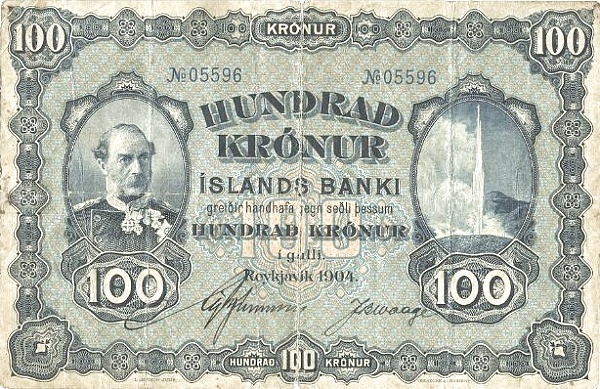
Displays a finely engraved portrait of King Christian IX, representing Iceland’s political relationship with Denmark at the time.
-
Contains the official promise to pay one hundred krónur in gold to the bearer on demand, reflecting the gold-backed nature of Iceland’s early currency.
-
Richly detailed guilloche patterns, ornate borders, and early-20th-century engraving techniques give the note a majestic and authoritative appearance.
-
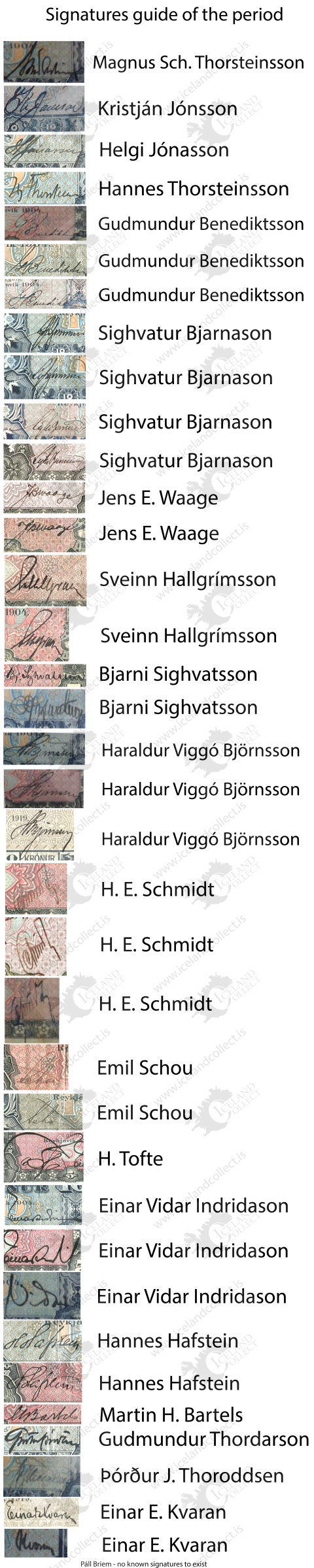
Includes signature panels, serial numbers, and a security watermark embedded in the paper.
Reverse (Back)
-
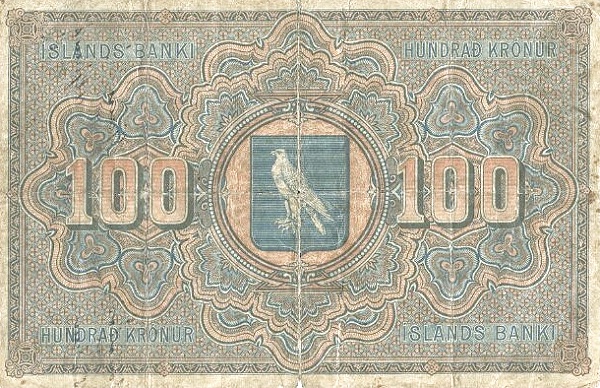
Features an elegant yet restrained layout, highlighting the denomination “Hundrað Krónur” and the name Íslandsbanki.
-
Symmetrical framing and decorative motifs enhance its visual appeal while maintaining official clarity.
-
The design emphasizes functionality and authenticity, consistent with early Icelandic banknotes.
Printing & Paper Quality
-
Produced on strong, high-quality note paper suitable for circulation in Iceland’s growing economy.
-
Engraving and printing techniques reflect the standards of major European banknote printers of the early 1900s.
📜 Circulation & Withdrawal
Issued in 1904, the 100 krónur note circulated during a period of significant economic development in Iceland. Due to its high value, it was printed in far smaller quantities than low- and mid-range denominations. Many notes were redeemed and destroyed as the banking system matured and newer issues replaced the first series.
As a result, the 100 Krónur 1904 is exceptionally scarce today, with only a limited number of surviving examples—particularly in collectible or high-grade condition.
💎 Collectability & Significance
The 100 Krónur 1904 (P-13) is regarded as one of the most important early Icelandic banknotes for several reasons:
-
It is the highest denomination from the very first Íslandsbanki issue.
-
Surviving examples are extremely rare, especially in fine or better condition.
-
It symbolizes the beginning of Iceland’s transition toward a more independent monetary and banking system.
-
The note’s artistry, scarcity, and historical weight make it a centerpiece in collections of Icelandic or Scandinavian currency.
For collectors of early European banknotes, the P-13 is considered a flagship item and a notable highlight in any advanced numismatic collection.