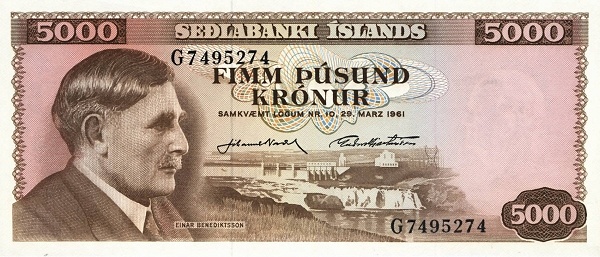
5000 Krónur 1971 – Iceland (Pick P-47)
Iceland’s highest-denomination banknote of the modern króna era
The 5000 Krónur 1971 banknote represents a major step in Icelandic monetary history as the highest denomination issued up to that time. Released by the Central Bank of Iceland (Seðlabanki Íslands), this note reflected inflationary pressures, economic growth, and the increasing need for high-value currency in both commercial and institutional transactions.
🏦 Historical Context
By the late 1960s and early 1970s, Iceland’s economy had expanded significantly, with higher wages, rising prices, and larger-scale financial activity. Existing denominations no longer met the practical needs of banks, businesses, and savings holders.
The introduction of the 5000 krónur note in 1971 addressed this demand and firmly established high-value paper currency as a standard part of Iceland’s monetary system.
🎨 Design & Appearance
Obverse (Front)
-
Portrait of Jón Sigurðsson, leader of Iceland’s independence movement
-
Issuer name Seðlabanki Íslands
-
Denomination text “Fimm þúsund krónur”
-
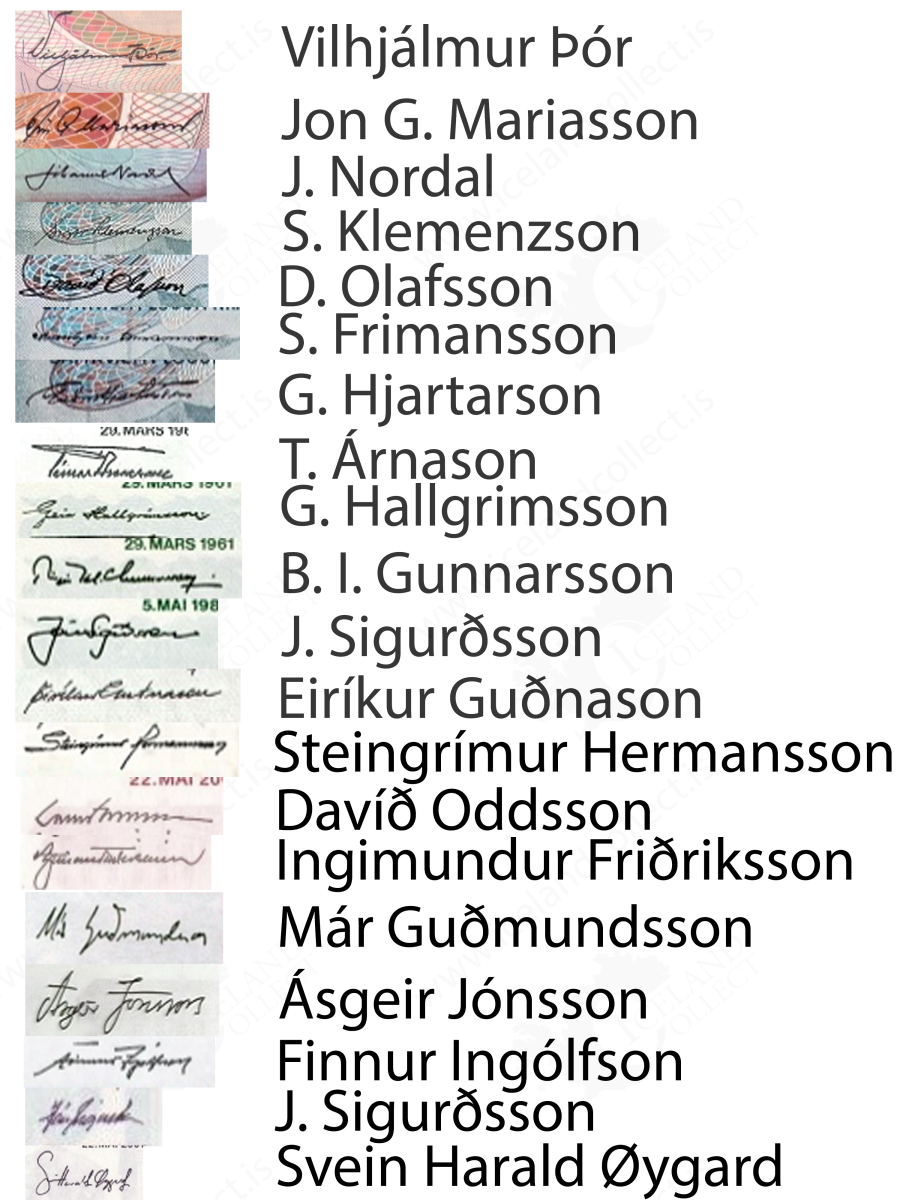
Printed signatures of Central Bank officials
-
Complex engraved patterns and security elements
-
Serial numbers in contrasting ink
The choice of Jón Sigurðsson reinforces the note’s national significance and continuity with earlier high-denomination designs.
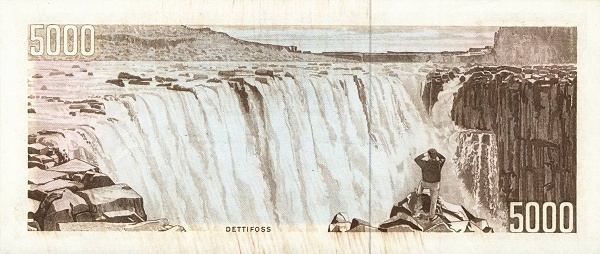
Reverse (Back)
-
Decorative engraved composition
-
Prominent numeral 5000
-
Formal and symmetrical layout emphasizing authority and value
The reverse design follows the restrained and dignified style typical of Central Bank issues from this period.
🖨️ Technical Details
-
Issuer: Seðlabanki Íslands (Central Bank of Iceland)
-
Year of Issue: 1971
-
Denomination: 5000 Krónur
-
Pick Number: P-47
-
Printing Method: Intaglio engraving
-
Paper: Secure banknote paper
-
Purpose: High-value transactions, savings, and institutional use
🔎 Collectability & Significance
The 5000 Krónur 1971 (P-47) is a key note for collectors of Icelandic currency due to:
-
Its role as the highest denomination of its era
-
Early issuance under the Central Bank of Iceland
-
Limited circulation compared to lower values
-
Strong collector demand, especially in high grades
Well-preserved examples are increasingly difficult to find and are considered essential pieces in advanced Icelandic banknote collections.
5000 Krónur 1971 – Iceland (Pick P-47)
Signatures guide for Icelandic currency of the period