The Early Paper Money of Iceland (1777–1820)
Background: Currency and Trade in 18th-Century Iceland
In the late 1700s Iceland was under the Danish Crown and subject to Denmark’s trade monopoly, which greatly restricted independent monetary activity.
Until Iceland issued its own banknotes decades later, the primary paper money circulating in Iceland consisted of Danish banknotes that were legally permitted for use within Iceland.
Legalisation of Danish Banknotes for Iceland (1778)
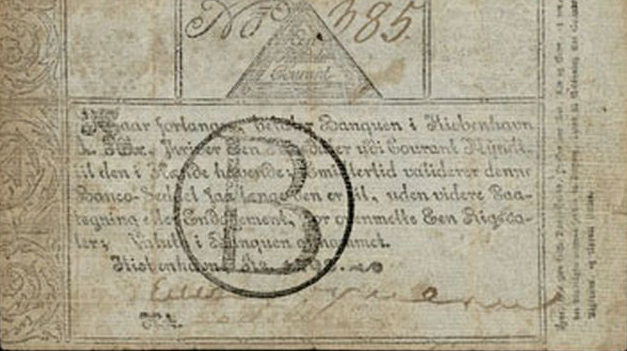
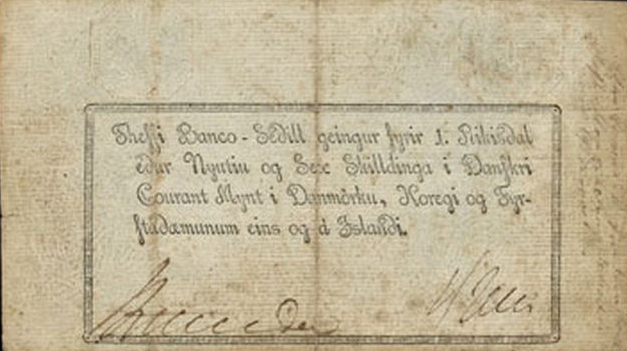
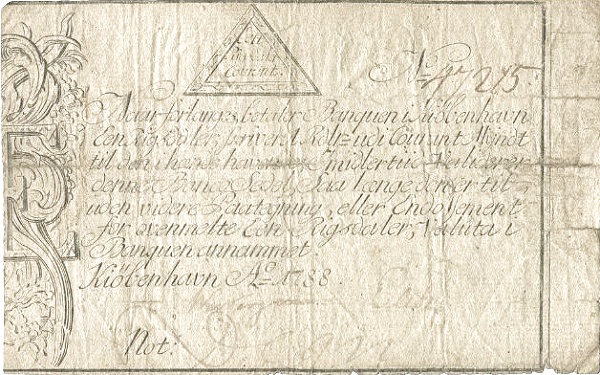
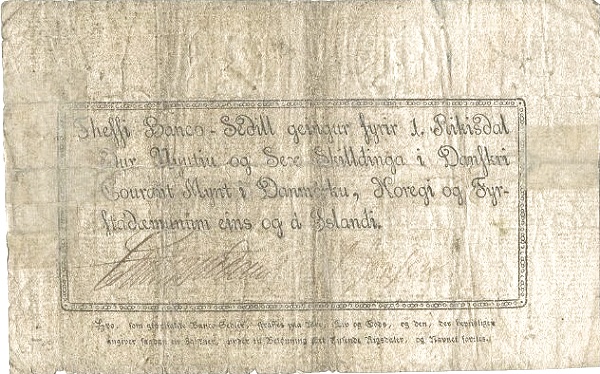
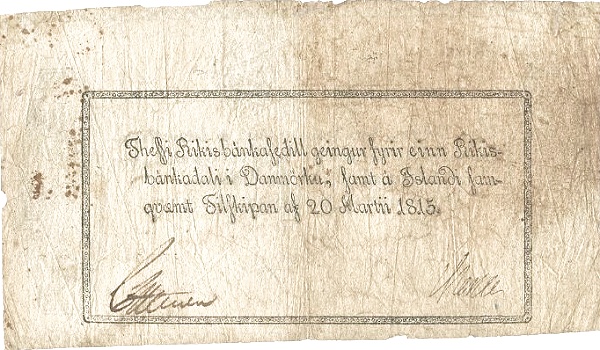
On 22 April 1778, by royal decree, Danish Courant banknotes of denominations 1 and 5 rigsdaler were legalized for use in Iceland, provided they bore an Icelandic‐language text on the reverse indicating their validity in Iceland.
The earliest known examples date from 1777 on the obverse, though the reverse text remained undated. These notes were overprints on Danish issues, adapted for Icelandic circulation.
For example, the 1 rigsdaler “Courant” note (catalogued as P-A1) lists the years 1777-1792 for issue and carried both Danish text and a special Icelandic overprint.
Despite the legal authorisation, the actual use of paper money in Iceland remained limited. Much economic activity still relied on barter and coins, due to the remoteness and thin monetary base of the Icelandic economy.
Transition of Issuing Authority & Withdrawal of Notes
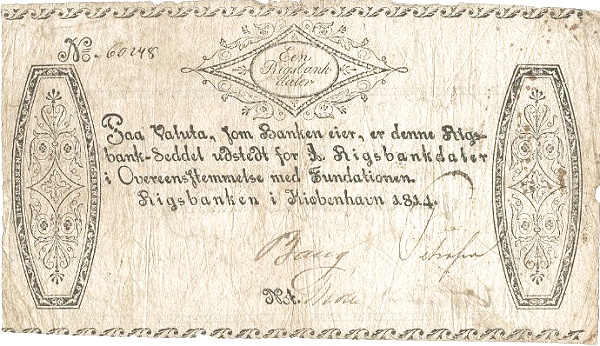
Following the collapse of the Danish Courant banknote system in 1813, the Danish state established the Rigsbank, which issued new notes. By a royal decree of 20 March 1815, Rigsbank notes with Icelandic validation were accepted in Iceland.
However, these issues were short‐lived in Iceland. By around 1820 the Iceland‐validated Danish banknotes were recalled and ceased to be legal tender in Iceland. After this, until Iceland’s own banknotes appeared in 1886, there were effectively no new paper issues specifically for Iceland.
Monetary Framework, Denominations and Design
-
The currency unit in use was the rigsdaler courant, with 96 skilling = 1 rigsdaler.
-
Examples of Iceland‐validated notes include 1 rigsdaler and 5 rigsdaler issues from 1778–1779, and later issues up to 1814-1815.
-
These banknotes were typically printed in Copenhagen (by Kurantbanken or Rigsbank) and then over‐printed or otherwise validated for Iceland with special reverse text. The Icelandic text indicated the note’s validity in Iceland (along with Denmark, Norway and their territories).
-
They were demonetised on 3 May 1820.
Significance and Legacy
This early experiment with paper money in Iceland shows how monetary systems extended from Denmark into Iceland under colonial administrative control. Though usage was minimal, the legal authorisations mark the beginning of Iceland’s journey toward issuing its own currency. After 1820, Iceland would only later develop a distinctly Icelandic currency system culminating in the Landssjóður issues of 1886.
Collectors value these early issues highly because of their rarity and historical importance — many specimens survive only in museums or private collections.