50 Krónur 1904 – Iceland P-12
A High-Value Early Banknote from the First Íslandsbanki Issue
🏦 Historical Background
The 50 Krónur 1904 banknote is one of the highest denominations from the very first series issued by Íslandsbanki shortly after its founding in 1904. This series marked the introduction of Icelandic-bank–issued króna currency and symbolized the modernisation of Iceland’s financial system.
As a high-value note, the 50 krónur denomination was mainly used in trade, wholesale commerce, and significant financial transactions. Because fewer high-denomination notes were printed and many were redeemed or worn out over time, the 50 krónur from 1904 is notably scarce today.
🎨 Design & Features
Obverse (Front)
-
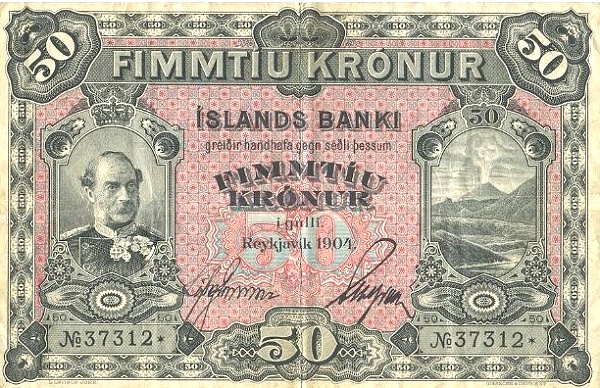
Features a distinguished engraved portrait of King Christian IX, highlighting Iceland’s political ties to Denmark during the early 20th century.
-
Includes the formal promise to pay fifty krónur in gold to the bearer, reflecting Iceland’s adherence to the gold standard and the note’s substantial value.
-
Intricate guilloche patterns, fine line engravings, and ornamental borders give the note a refined and authoritative appearance.
-
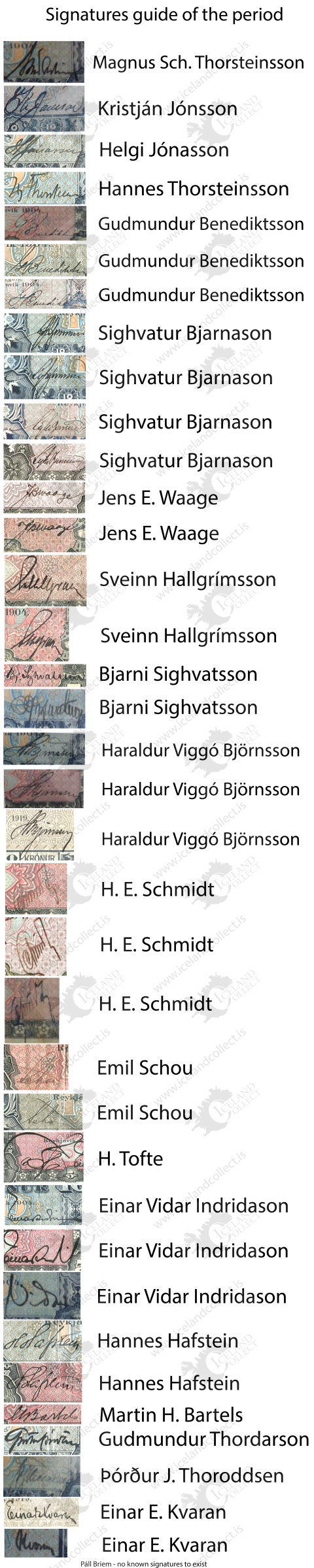
The design incorporates serial numbers, signature fields, and a watermark that helped protect against early forms of counterfeiting.
Reverse (Back)
-
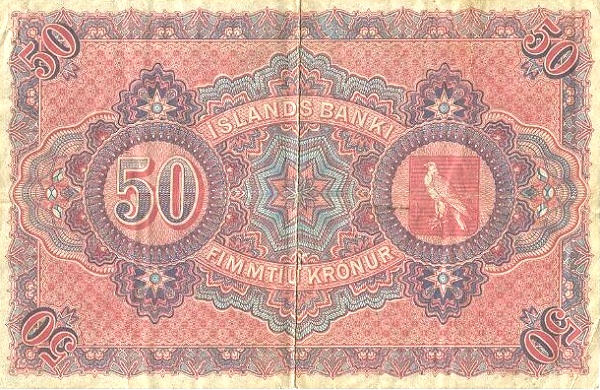
Presents a clean but elegant design featuring the denomination “Fimmtíu Krónur” along with the issuing name Íslandsbanki.
-
Decorative borders and symmetry provide a balance between security and aesthetic appeal.
-
Compared to the front, the reverse is more minimalistic, focusing on clarity and official recognition.
Production & Printing Quality
-
Printed on high-grade banknote paper suitable for long-term circulation.
-
Crafted with engraving and printing techniques typical of leading European banknote production houses of the time.
📜 Circulation & Withdrawal
Entering circulation in 1904, the 50 krónur note served Iceland during a period of economic development and increasing local banking activity. Due to its high value, fewer notes were issued than lower denominations, and many were either redeemed, damaged, or destroyed over the years.
As later redesigns and new issuances replaced the early series, the 50 krónur 1904 was gradually withdrawn from use. Surviving examples kept in good condition are rare and increasingly difficult to find.
💎 Collectability & Significance
The 50 Krónur 1904 (P-12) is highly sought after by collectors for several key reasons:
-
It is a high-denomination note from the first Íslandsbanki banknote series, making it a crucial piece of early Icelandic monetary history.
-
Very few examples remain today, especially in collectible grades, due to limited issuance and heavy redemption.
-
The note reflects Iceland’s transition toward a modern financial identity while still under Danish crown rule.
-
Its combination of rarity, historical significance, and early 1900s artistry makes it a centerpiece for serious collectors of Icelandic or Scandinavian currency.