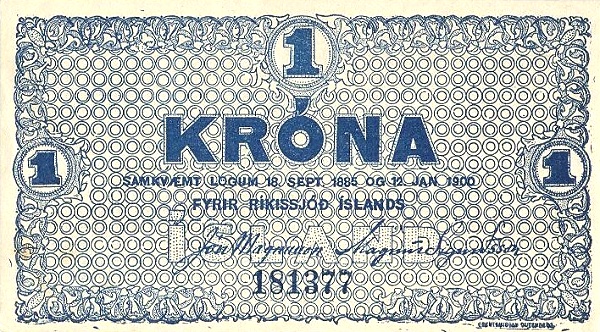
1 Króna 1920 – Iceland (Pick P-17a)
The First Icelandic 1-Krona Banknote Issue
The 1 Króna 1920 (Pick P-17a) is widely recognized by collectors as the first Icelandic banknote of this denomination, and it holds a special place in Iceland’s monetary history. Issued during a period of financial instability, this note marks the beginning of Iceland’s small-denomination paper currency and represents a significant transition in the nation’s banking system.
Historical Background
In 1919, the private bank Íslandsbanki, which had long been responsible for issuing most of Iceland’s banknotes, collapsed. To prevent a shortage of money—especially small denominations needed for everyday trade—the Icelandic government intervened and began issuing provisional banknotes in 1920.
These new provisional notes were created quickly, using available printing resources, and were meant to serve until a stable monetary authority could be re-established. The 1-króna note of 1920 was therefore the first officially government-controlled issue of this denomination, marking a historic shift away from private note issuance.
Design Characteristics
Although simple in appearance compared to later issues, the 1920 1-króna note has several distinctive features:
-
Denomination: “1 Króna” printed prominently
-
Year: 1920
-
Issuing Authority: Icelandic governmental authority taking over currency matters after the failure of Íslandsbanki
-
Printing Style: Early 20th-century engraving, produced quickly and in limited batches
-
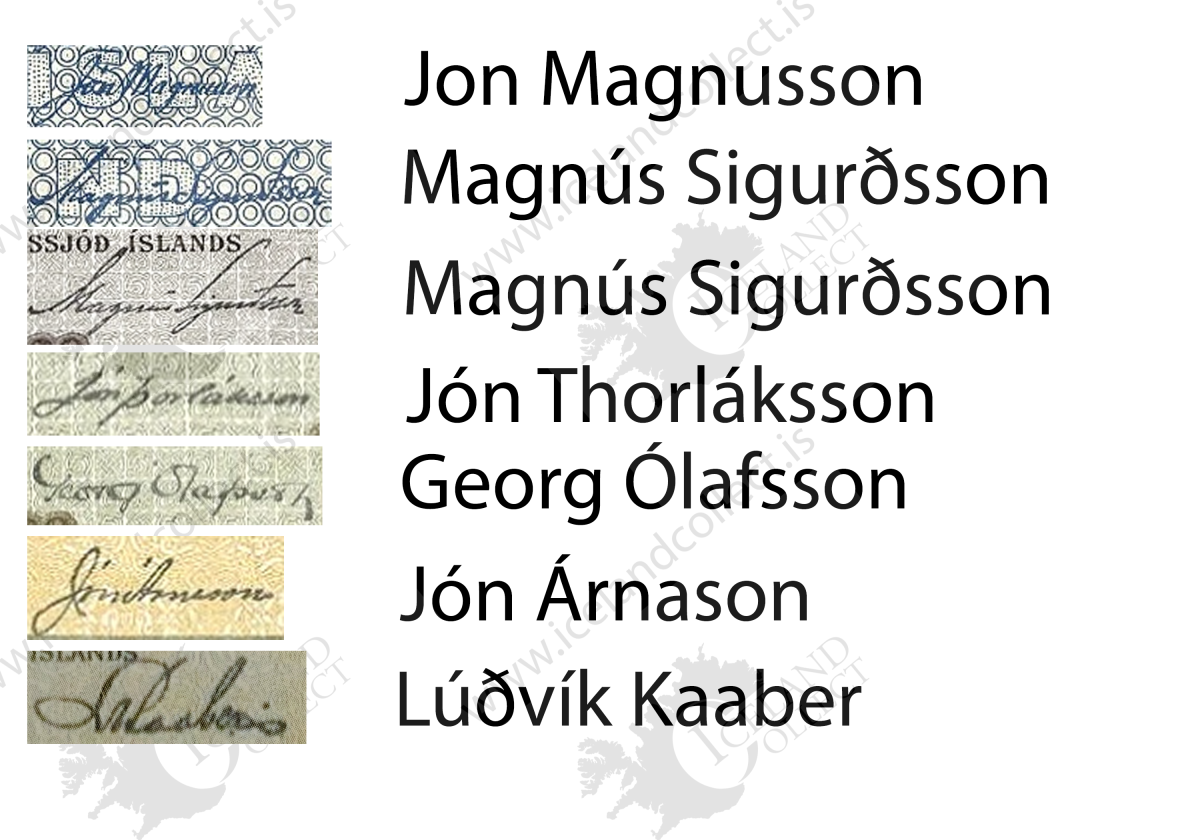
Signatures: Officials appointed during the transitional period
-
Serial Numbers: Printed in small quantities, with variations depending on batch
-
Paper: Strong but relatively thin banknote paper typical of early Icelandic issues
Because these notes were introduced during a financial emergency, some slight variances between examples exist, including subtle differences in ink tone and signature combinations.
Why This Note Is Important
The 1 Króna 1920 is historically important because:
-
It is the first 1-krona banknote ever issued in Iceland.
-
It marks the shift from privately issued currency to government-controlled banknote production.
-
It represents Iceland’s struggle to stabilize its economy after the collapse of Íslandsbanki.
-
Surviving examples are scarce, as these low-value notes circulated heavily and were often redeemed or worn out.
As a result, the 1920 1-króna note has become highly collectible and is considered a key foundational piece for any Icelandic paper-money collection.
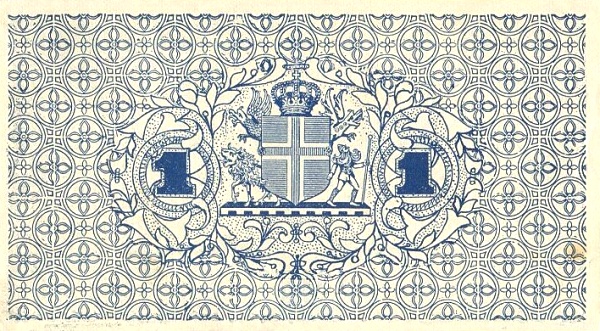
1 Króna 1920 – Iceland (Pick P-17a)
Signatures guide for Icelandic currency of the period